In the healthcare sector, preventive maintenance (PM) is far more than just a line item on a checklist; it is the ultimate safeguard between patient safety and medical incidents. For Biomedical Engineering (BME) technicians, this is a mission-critical responsibility. Yet, in the field, this mission all too often turns into a frustrating and high-stakes scavenger hunt.
Safety at risk: when lost equipment turns dangerous
Let’s imagine a common scenario: a vital signs monitor is due for its preventive maintenance. The BME technician searches the unit, but the device was moved to another department during a patient transfer. Unable to locate it, the maintenance is postponed. The result? The device remains in service even as its battery begins to fail, risking a sudden shutdown at the very moment a caregiver needs it most.
The reality is stark: equipment that is hard to find is equipment that is not maintained on time. This operational disorder has two major impacts on:
The patient: whose safety is compromised by potentially failing equipment.
The biomedical technician: the true "collateral victim" who loses 15% to 20% of their valuable time searching for devices instead of inspecting them.
The Healthcare System: when equipment is not properly maintained, additional costs accumulate, further straining the budget deficit.
Accreditation Canada: compliance is no longer optional
Beyond the safety aspect, there is a legal and structural obligation: Accreditation Canada. To obtain and maintain this accreditation (required by the LSSSS, Act respecting health services and social services), healthcare facilities must adhere to Required Organizational Practices (ROPs).
The Preventive Maintenance Program is categorized as an ROP with “Major Compliance Tests.” This represents the highest level of requirement. Surveyors verify:
The existence of a preventive maintenance program for all devices.
The availability of relevant maintenance reports.
The documented follow-up of incident investigations.
The compliance paradox
Without a tracking system, how can a facility accurately monitor its inventory and guarantee compliance?
Non-compliance at this level leads to negative public reporting, intensified oversight by the MSSS, and the mandatory submission of an urgent corrective action plan.
The RIOH solution: IoTcare at the service of Biomedical Engineering
This is where RIOH’s IoTcare solution transforms the daily reality of Biomedical Engineering. Our Real-Time Location System (RTLS) allows facilities to move from reactive management to total control.
Real-Time Tracking
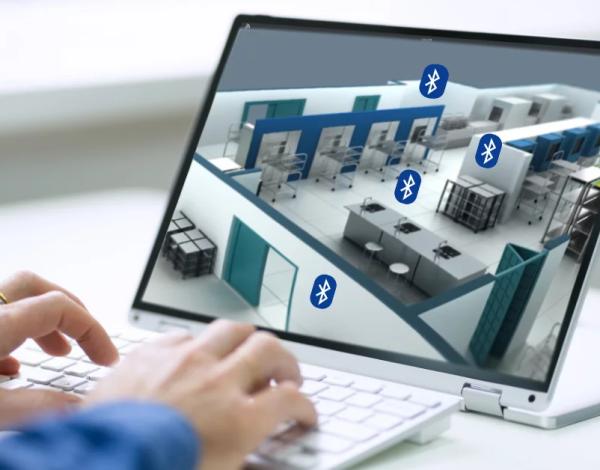
Stop wasting minutes in the hallways. Whether your equipment is Wi-Fi connected or tracked via BLE tags, every device appears instantly on your interactive map.
Dynamic Status Management
With IoTcare, you can change an equipment’s status with a single click:
-Available: ready for patient care.
-Under maintenance: virtually removed from the floor until the equipment is returned to service.
Simplified Compliance and Reporting
By knowing exactly where devices requiring inspection are located, you can complete your maintenance cycles on time. This allows you to generate accurate compliance reports for Accreditation Canada, proving that 100% of your fleet is safe and functional.
The modernization of the healthcare system under Santé Québec demands tools that match our ambitions. Preventive maintenance should never be hindered by a tracking problem..
Ready to secure your accreditation and give your BME teams their technical time back?
At RIOH, we help CIUSSS and CISSS see the invisible. Optimize your operations, protect your budgets, and above all ensure the safety of your patients.