In the frantic pace of a hospital, one truth stands clear : you cannot manage what you cannot see. Behind budgetary challenges and staff retention issues lies an invisible enemy: the lack of visibility of mobile equipment.
At RIOH, we believe that the digital transformation of our healthcare system, as initiated by the Digital Health Record (DHR) and the 2025-2035 Quebec Infrastructure Plan (PQI), must not only take place in administrative offices but must be felt directly on the clinical floor.
The Squirrel Syndrome: when lack of visibility hinders the flow of care
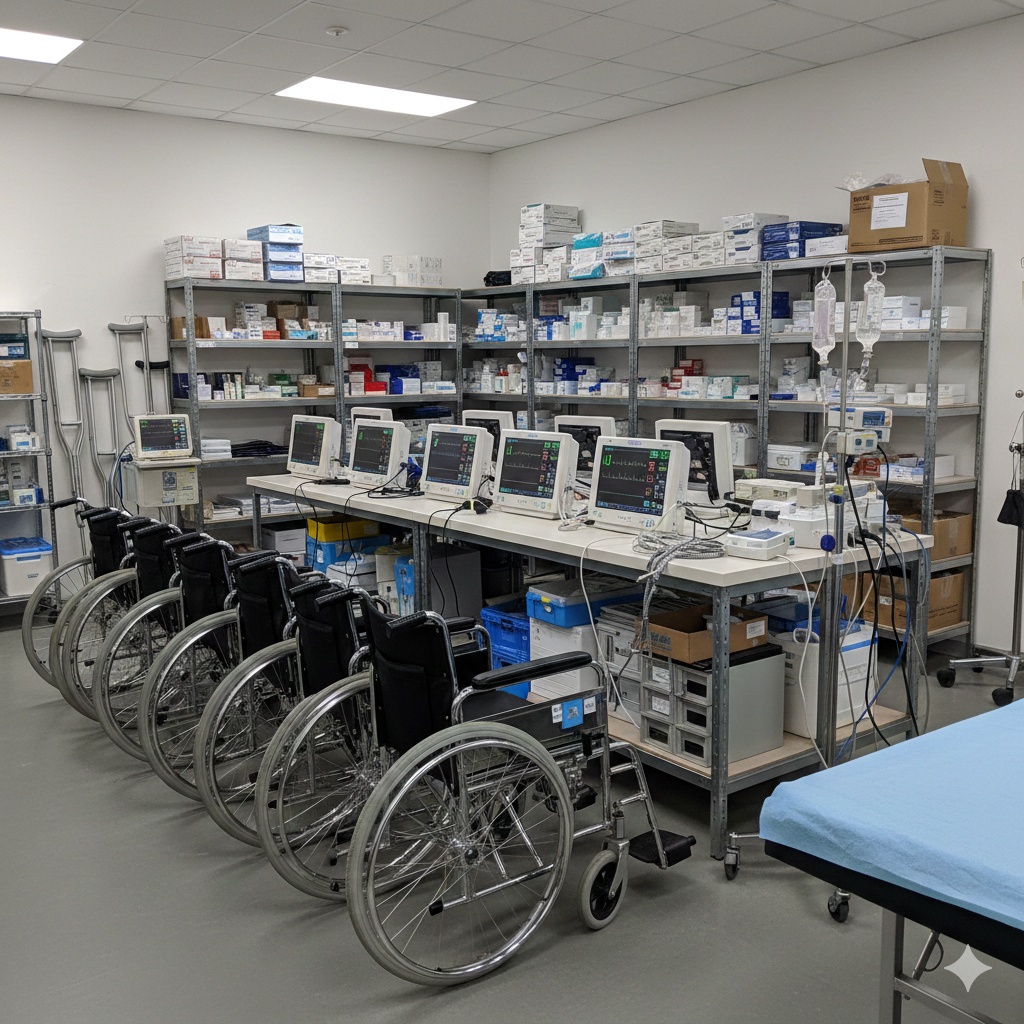
Today’s hospital environment suffers from what Lean Healthcare experts call the “Squirrel Syndrome.” This phenomenon is a rational response to an unpredictable environment: when staff members fear a shortage of critical equipment (e.g., volumetric pumps, vital signs monitors, etc.), they tend to hide units to ensure they can find them for their next shift. Whether it is two pumps tucked away in a cupboard or equipment stored in a mechanical room, the intent remains the same: to guarantee equipment availability.
Loss of clinical time :
It is estimated that staff members spend between 30 and 60 minutes per shift searching for equipment. This is time taken away from patient care.
Unnecessary equipment purchases :
The hospital’s inventory shows that pumps are available, yet they are nowhere to be found. The result? The organization purchases or rents additional equipment even though the units are already there they are simply invisible.
The “blind spots” of equipment transfers: where is the budget being lost?
Another major challenge lies in transfers between units or facilities. Imagine a patient being transferred from the emergency room to radiology. In the rush, a high-precision monitor, sometimes valued at over $15,000, accompanies the patient, only to be forgotten on the stretcher or even sent in an ambulance to another facility.
Without geolocation, this equipment falls off the radar for months, if not forever. Multiply these losses by the number of wheelchairs, IV poles, and stretchers, and the result is massive annual losses for our CIUSSS and CISSS.
This is where the Asset Maintenance Deficit (AMD) becomes glaring: we are prematurely replacing what has simply been misplaced.
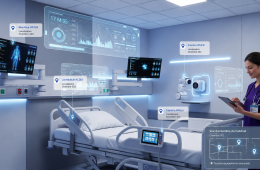
IoTcare : 360° real-time visibility
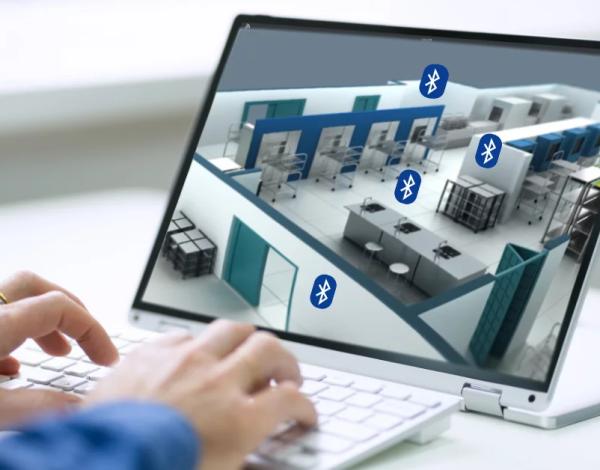
The 2025–2035 PQI-RI (Information Resources) emphasizes the importance of modernizing our technological infrastructure. RIOH is directly aligned with this mission, offering a unique technological hybridization platform that transforms the hospital into a smart environment.
Technology Hybridization
Live inventory
Safe environment
BLE (Bluetooth Low Energy): Enables the tracking of non-connected equipment, such as wheelchairs or stretchers.
Wi-Fi: Leverages existing connectivity for smart equipment already on the network.
UWB (Ultra-Wideband) technology: Provides surgical precision (down to 30 cm) for critical equipment in high-density areas.
Unlike manual audits, which take months and are obsolete the moment they are published, RIOH provides an instant snapshot of your tracked assets. Stop searching : start finding.
By ensuring equipment accessibility, we eliminate the insecurity that drives 'Squirrel Syndrome.' Staff can finally focus on their primary mission.
Our mission: giving time back to care
As we undergo the modernization of the network with Santé Québec, efficiency on the floor can no longer rely on luck or staff memory. Technology should not be an additional burden; it must be an efficient, seamless infrastructure that supports every move.
How about we discuss your clinical floor challenges? Whether it’s reducing equipment loss or automating your inventory, our team is here to help you build the hospital of tomorrow.